Tongue & Lip Ties: Could Oral Restriction Be Affecting Your Baby’s Reflux or Fussiness?
If you’ve been told your baby has reflux, colic, or feeding challenges (and nothing seems to fully explain why) you’re not alone. Oral restrictions like tongue and lip ties are often overlooked contributors to common infant symptoms. Understanding how they affect feeding and the body as a whole can help parents make more informed care decisions.
Let’s break it down.

What is a Tongue Tie?
During early fetal development, a band of tissue forms in the center of the mouth to help guide the development of the jaw, palate, and surrounding muscles. This tissue is called the frenulum. As pregnancy progresses, the frenulum is designed to thin and recede.
In some babies, this process doesn’t fully occur.
When the frenulum remains thick, short, or restrictive — limiting normal tongue movement — it’s referred to as ankyloglossia, or more commonly, a tongue tie. Research suggests this occurs in approximately 4–10% of infants.
Because the tongue plays a critical role in feeding, swallowing, breathing, and overall body tension, restricted movement can have far-reaching effects.
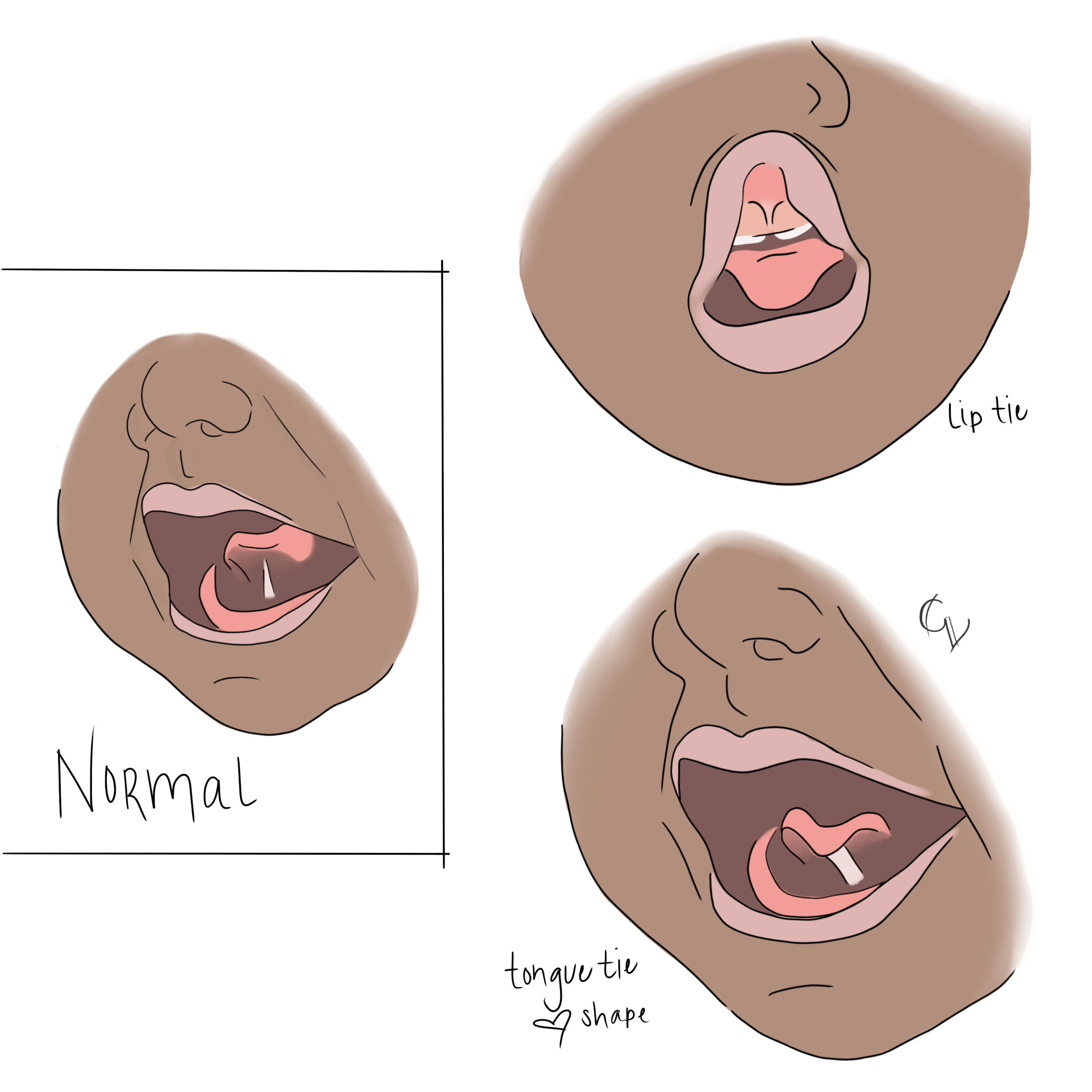
What About Lip Ties?
A lip tie occurs when the frenulum connecting the upper lip to the gum tissue is tight or positioned too low. In some cases, it may extend behind the gums or toward the roof of the mouth.
Lip ties can be easier to visually identify than tongue ties, especially when lifting the upper lip. As teeth begin to emerge, a persistent gap between the front teeth may also occur.
While lip ties alone often cause fewer functional issues than tongue ties, they frequently coexist with other oral restrictions, including tongue and buccal (cheek) ties. All of which can collectively impact feeding efficiency.
Common Signs of Tongue or Lip Ties in Infants
Every baby presents differently, but oral restrictions may be associated with:
• Difficulty breastfeeding or bottle feeding
• Clicking sounds or loss of suction during feeds
• Frequent unlatching
• Extended feeding times
• Poor weight gain
• Gagging, coughing, or choking while feeding
• Milk leaking from the mouth or nose
• Lip blisters or calluses
• Excessive spit-up or reflux-like symptoms
• Gas, bloating, or constipation
• Colic or persistent fussiness
• Noisy breathing or snoring during sleep
Signs Moms May Experience
Feeding challenges affect more than just baby. Moms may notice:
Nipple pain, cracking, or compression after feeds
Bleeding or recurrent nipple trauma
Thrush
Long or ineffective nursing sessions
Incomplete breast drainage
Decreased milk supply over time
These struggles are not a reflection of maternal failure. When a baby cannot achieve a deep, effective latch, milk transfer and stimulation suffer (often leading to discomfort and supply concerns.)
Why Oral Ties Can Affect the Whole Body.
The frenulum is made of fascia, a connective tissue that surrounds muscles and organs throughout the body. Fascial tissue forms long, continuous chains. This means restriction in one area can create tension elsewhere.

Various myofascial lines in the human body. Visual representation of how fascia connects different parts of the bod
The fascia under the tongue connects into what’s known as the deep front line, a chain that includes the neck, diaphragm, and core structures. Because of this, babies with oral restrictions may appear:
Tense or rigid
Difficult to settle
Uncomfortable in certain positions
More prone to reflux or digestive distress
This whole-body connection is why addressing tension…not just the mouth… matters.

Illustration of dissected fascia line associated with tongue ties.
Link between Tongue Ties and Infant Reflux
When a baby cannot maintain a proper seal while feeding, they often swallow excess air. This is called aerophagia, and it can significantly contribute to reflux symptoms.
Aerophagia-induced reflux (AIR) has been linked to tongue and lip ties due to inefficient latch mechanics. Additionally, tension in the tongue can translate into tension in the diaphragm, which plays a critical role in digestion and reflux regulation.
In short: restricted oral movement can affect feeding mechanics and digestive comfort.
Tongue Ties & Colicky Babies
Colic” is a term used when babies cry excessively and are difficult to soothe without a clear cause. While feeding difficulties are not the only contributor, oral restrictions can play a role.
Babies are born with the instinct to feed efficiently. BUT a restricted tongue or lip requires compensation. This extra effort can lead to fatigue, frustration, and poor feeding outcomes, all of which may contribute to colicky behavior.
Supporting Babies with Tongue & Lip Ties
Care for oral restrictions is often multidisciplinary, and may include:
Evaluation by a pediatric chiropractor (you can schedule an appointment with our pediatric chiropractor here.)
Craniosacral therapy to address body tension
Support from a skilled lactation consultant
Assessment by a qualified pediatric dentist or provider trained in oral restriction evaluation
Not every tie requires revision, but every baby deserves a functional assessment.

Craniosacral Therapy & the Revision Process
Craniosacral therapy (CST) can be especially supportive when oral restriction release is recommended. CST works with the entire body rather than isolating the mouth alone.
In our experience, infants often benefit from:
1–2 visits prior to revision to prepare the body
2–3 visits following revision to support healing and integration
This approach helps improve outcomes and supports long-term function.
Pediatric Chiropractic & Lactation Support for Tongue and Lip Ties in Mason City, IA
Supporting infants with tongue and lip ties often requires more than a single approach. At Bumps and Babes in Mason City, Iowa, our pediatric chiropractic care is uniquely complemented by lactation consultant training, allowing us to address both body tension and feeding mechanics during the same visit.
This dual perspective matters. Oral restrictions don’t just affect the mouth — they impact latch quality, milk transfer, and feeding efficiency. By combining gentle pediatric chiropractic adjustments with lactation-informed feeding support, we are able to look at the whole picture of how your baby feeds, moves, and functions.
Families in Mason City and the surrounding North Iowa communities appreciate having coordinated care under one roof. Instead of bouncing between providers, parents receive guidance that connects body alignment, oral function, and breastfeeding or bottle-feeding support in a clear, practical way.

Local Support for North Iowa
Tongue and lip ties may be small structures, but their impact can be significant. If your baby is struggling with feeding, reflux, or persistent fussiness, oral restrictions may be worth exploring.
A comprehensive, gentle, and collaborative approach can make a meaningful difference for both babies and parents.
If you’re located in Mason City, IA or nearby areas and have concerns about feeding, reflux, or persistent fussiness, early support can make a meaningful difference. Pediatric chiropractic care — combined with lactation expertise — offers a gentle, supportive option for infants navigating oral restrictions.
Schedule a pediatric chiropractic and lactation-informed evaluation in Mason City today to see how comprehensive care can support your baby’s feeding and comfort.
